The Range of Rescue Stretchers at Absafe
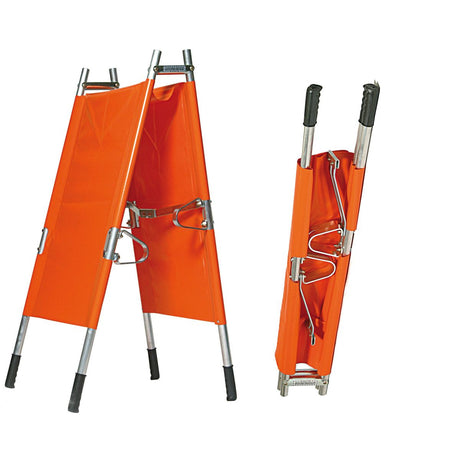
Rescue stretchers must be matched to the rescue plan. Before choosing the best option, consider:
-
How will the casualty be moved? Horizontal carry, vertical lift, dragged through a tight opening, or lowered from a height.
-
What is the access point? A standard manhole or hatch opening limits the width and configuration of the stretcher that will fit.
-
Does the casualty have a suspected spinal injury? Rigid or semi-rigid stretchers with integrated spinal support may be required.
-
How far does the stretcher need to be carried to the casualty? Compact, rollable, and backpack-style stretchers make it easier for your team to transport equipment into remote or elevated sites.
At Absafe, you can find suitable rescue devices for specific settings.
Vertical Rescue Stretchers
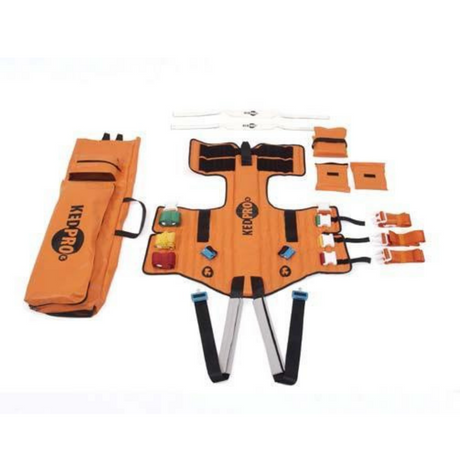
Vertical rescue stretchers are designed for lifting and lowering a casualty in a near-vertical or fully vertical orientation.
They feature:
-
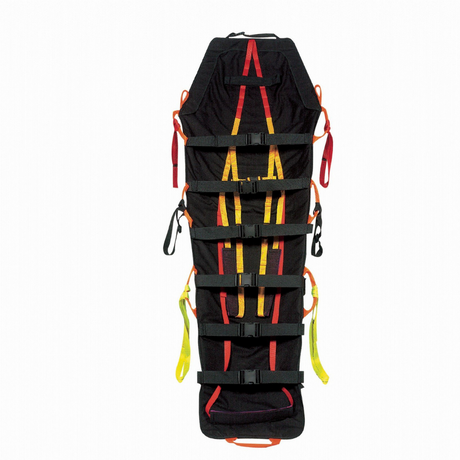
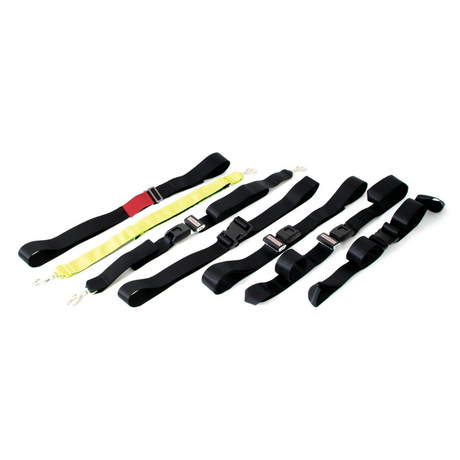
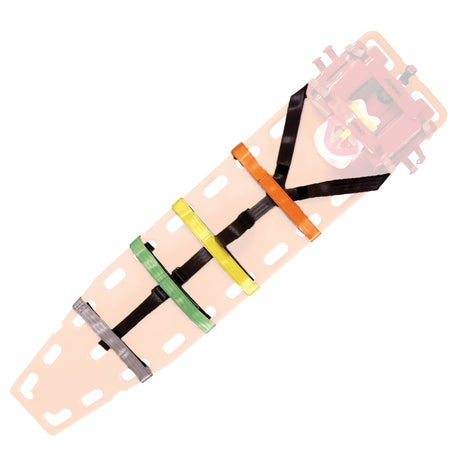
Full body restraint system. Colour-coded straps cover the head, shoulders, torso, groin, and feet, keeping the casualty secure through the lift without restricting circulation.
-
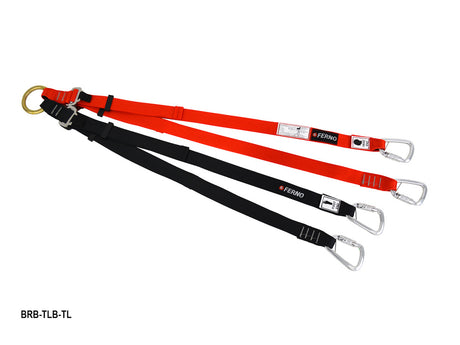
Multiple lifting slings. Six-point lifting configurations distribute load evenly and maintain a controlled, level orientation under suspension.
-
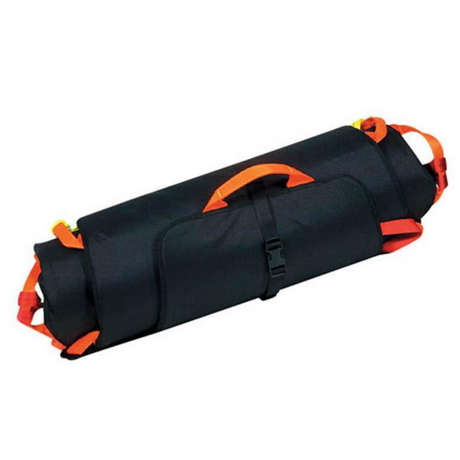
Roll-up or compact design. Most vertical rescue stretchers roll into a carry bag or backpack for transport to the site.
-
Rigid-when-deployed design. The stretcher wraps around the casualty and becomes rigid under tension, protecting the casualty's limbs and preventing movement during evacuation.
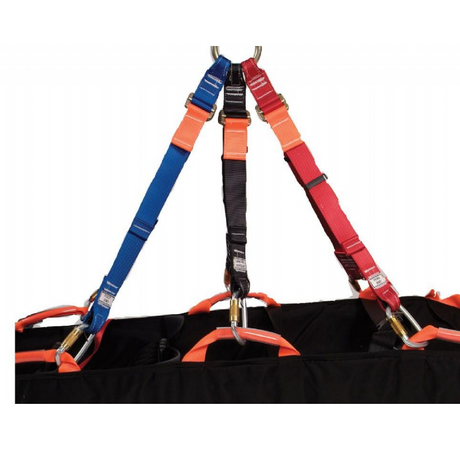
Vertical rescue stretchers are compatible with lifting bridles for connection to rescue winches, tripods, and davit systems.
Basket Stretchers
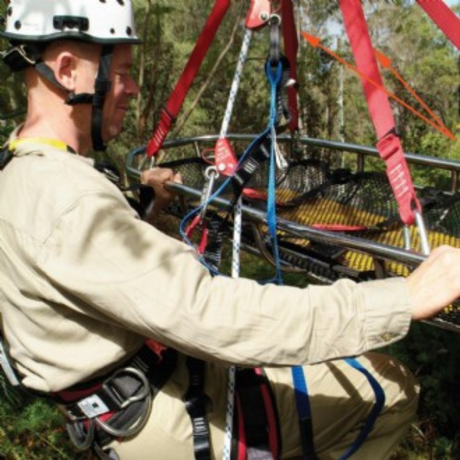
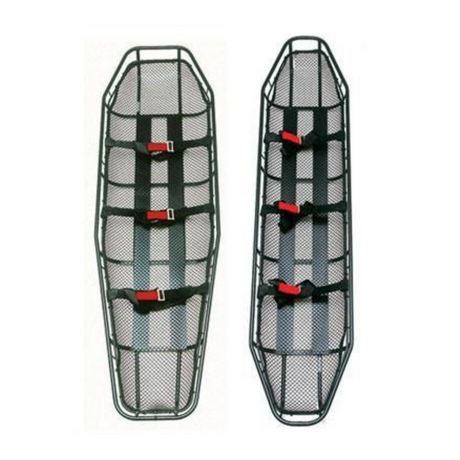
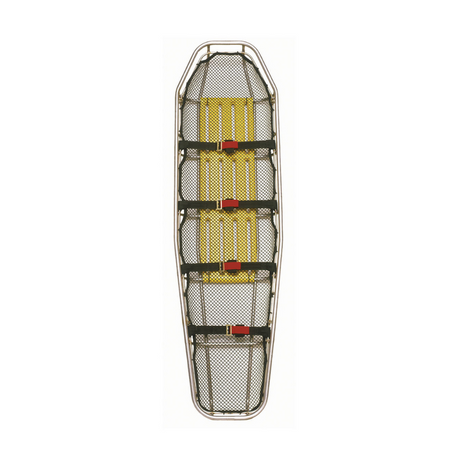
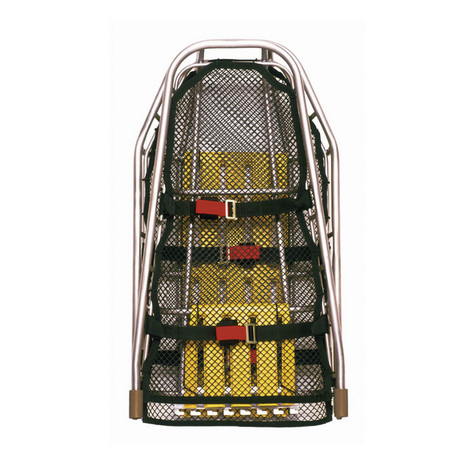
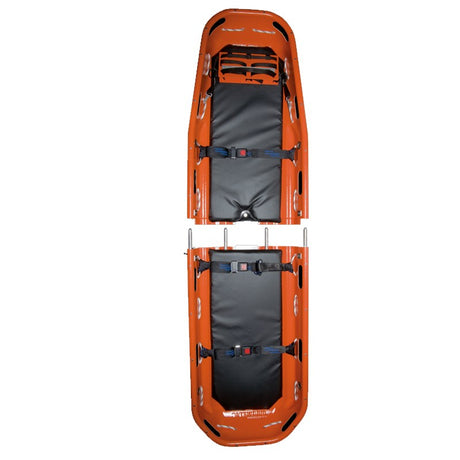
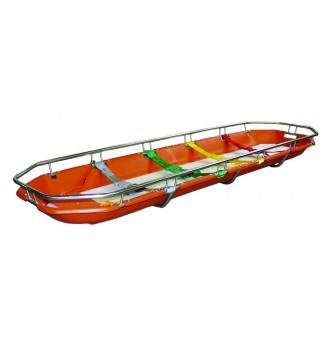
A basket stretcher provides a rigid, structured frame that surrounds the casualty during movement. The basket design keeps the patient immobile and protected from the environment.
Basket stretchers feature:
-
Rigid frame. Stainless steel, aluminium, or fibreglass construction.
-
Multiple attachment points. They allow horizontal carry by handles along the sides and vertical lift via attachment points at the head and foot ends.
-
Mesh or solid base. Mesh bases allow water drainage during water-based rescues and improve airflow. Solid bases offer easier decontamination.
-
Optional skirt and spinal splint. Many basket stretcher models include, or are compatible with, an integrated spinal splint for casualty immobilisation and an articulated skirt for upper-leg protection.
Basket designs work best for rough terrain evacuation, technical vertical and horizontal lifts, water rescue, industrial emergency response, and situations requiring structured patient immobilisation.
Rollable Stretchers
Rollable stretchers use a flexible, low-friction shell that can be rolled up for storage and transport, then wrapped around the casualty and secured with closure straps. Because the shell is flexible, it can be shaped to the patient and manoeuvred through tighter spaces than a rigid basket.
Key features:
-
Low-friction finish. It allows the stretcher to be dragged across surfaces without snagging.
-
Multiple carry handles. They are positioned around the stretcher to allow several rescuers to work simultaneously in different configurations.
-
Vertical and horizontal lift points. Most models include integrated lifting strops for both orientations.
-
Bariatric options. Extended-width versions with reinforced construction suit casualties who cannot be safely extracted in a standard stretcher.
The absence of webbing on the underside of most rollable stretchers prevents snagging during extraction through tight openings.
Stretcher Accessories
Depending on the rescue scenario, you’ll need supporting equipment to complete the extraction safely. At Absafe, we offer:
-
Lifting bridles. They help connect the stretcher to a rope system, winch, or overhead lifting point. Bridle configuration (4-point or 6-point) determines how the stretcher hangs under load.
-
Tripods. They provide an overhead anchor point above a confined space entry. Used with a rescue winch for controlled raising and lowering of a stretcher through a vertical opening.
-
Rescue winches. Powered or manual devices for raising and lowering a stretcher under controlled load. They are essential for vertical confined space extractions where manual hauling is impractical or unsafe.
-
Carry bags and backpacks. They protect the stretcher in storage and allow rapid deployment. Many vertical and rollable stretchers include a bag that doubles as a backpack.
We also have rescue kits that include a stretcher, lifting strops, and a carry bag. It's the most practical option when setting up a new rescue capability or equipping a site for the first time.
Shop Reliable Rescue Stretchers in Australia
Absafe has been supplying safety equipment to Australian workplaces since 2002, with over 150 years of combined experience across our team. We specialise in complex, high-risk work environments where rescue capability is a genuine operational requirement.
Our stretcher range includes vertical, basket, and rollable options, with accessories to suit any situation. Whether you're equipping a confined-space rescue team or setting up an emergency response, we can help you find the right solution.
Browse our stretcher range online and feel free to contact our team for expert advice.
FAQs
1. What is the difference between a basket and a vertical rescue stretcher?
A basket stretcher is a rigid, enclosed frame for horizontal carry or vertical lift. It fully surrounds and immobilises the casualty, making it suited to rough terrain and technical lifts.
A vertical rescue stretcher rolls up for transport, wraps around the casualty and becomes rigid under tension. It includes a full-body restraint system and multiple lift slings for controlled vertical extraction. It's more compact and better suited to tight environments.
2. What accessories do I need for a stretcher rescue?
For most technical rescues, you'll need a lifting bridle to connect the stretcher to your rope or winch system, a rescue winch or haul system for raising and lowering, and a tripod if the access point is a vertical opening.
For teams starting from scratch, a complete rescue kit is the simplest way to establish a baseline rescue capability.
3. When is a rescue stretcher required?
Rescue stretchers are used whenever a casualty must be evacuated from a location that prevents normal ambulance access or standard manual handling, including:
-
Confined space rescue: tanks, silos, tunnels, sewers, manholes, and utility vaults.
-
Height and rope access: rooftops, telecommunications towers, wind turbines, bridges, and facade structures.
-
Mining and tunnelling: underground extraction over long distances with limited access.
-
Industrial plant: elevated platforms, pressure vessels, and internal structures.
-
Remote and wilderness rescue: areas inaccessible to vehicles where casualties must be moved to a landing zone.
-
Emergency services and HAZMAT: fire and rescue, police, and emergency response teams.
4. Which stretcher suits confined-space rescue?
Use a vertical rescue stretcher or a split-basket stretcher for extraction through a manhole or hatch.
For horizontal extraction through a restricted passage, use a rollable, low-friction stretcher that can be dragged without snagging.
If the rescue involves both, choose a rollable stretcher rated for horizontal and vertical orientations, with the appropriate lifting straps attached.